Banking, Finance, DRT & SARFAESI
General information on banking and finance disputes, debt recovery, proceedings before the Debt Recovery Tribunal (DRT) and Debt Recovery Appellate Tribunal (DRAT), the SARFAESI Act, secured creditor remedies and related proceedings in India.

Quick Navigation – 12 Sections
1
Banking Disputes & Debt Recovery Matters
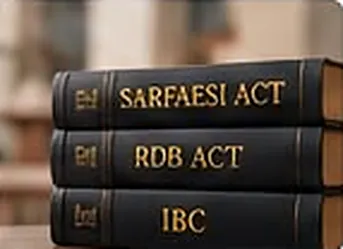
Banking facilities often give rise to disputes concerning repayment, default, outstanding liabilities, securities and guarantees. Recovery of such debts may involve specialist statutory mechanisms, including proceedings before the Debt Recovery Tribunals and measures under the SARFAESI Act.
The forum and remedy depend on the lender, the nature of the facility, the amount involved and whether the debt is secured.
See also: Corporate & Commercial Law.
2
Loan, Credit & Banking Recovery Matters
Loans, credit facilities, defaults and recovery by banks and financial institutions.
Recovery may be pursued through civil suits, the DRT or other statutory mechanisms, depending on the lender, the amount and the security involved.
See also: Civil Litigation & Court Proceedings.
3
Debt Recovery Tribunal (DRT) Proceedings
Proceedings before the Debt Recovery Tribunals.
DRTs are established under the Recovery of Debts and Bankruptcy Act, 1993 to hear applications by banks and financial institutions for recovery of debts of or above the prescribed amount.
4
Original Applications Before DRT
Filing, defence and adjudication of original applications.
A bank or financial institution files an original application under Section 19 of the RDB Act. The defendant may file a written statement, set-off or counter-claim as the Act provides.
5
Debt Recovery Appellate Tribunal (DRAT)
Appeals from DRT orders before the DRAT.
Appeals against DRT orders lie to the Debt Recovery Appellate Tribunal, subject to the pre-deposit requirements under the RDB Act or the SARFAESI Act, as applicable.
6
SARFAESI Act & Secured Creditor Proceedings
Secured creditor enforcement under the SARFAESI Act, 2002.
The SARFAESI Act allows secured creditors to enforce security interests without court intervention in specified cases. A person aggrieved by measures under Section 13(4) may apply to the DRT under Section 17.
See also: Property, Real Estate & RERA.
7
Demand Notices Under SARFAESI
Demand notices under Section 13(2) and replies.
Before taking measures, the secured creditor issues a notice under Section 13(2) requiring discharge of liabilities within sixty days. Representations or objections by the borrower must be considered and replied to under Section 13(3A).
8
Security Interest & Asset Enforcement
Possession, sale and enforcement of secured assets.
Measures under Section 13(4) include taking possession of secured assets, and the assistance of the District Magistrate or Chief Metropolitan Magistrate may be sought under Section 14.
See also: Property, Real Estate & RERA.
9
Borrower, Guarantor & Recovery Matters
Rights and liabilities of borrowers and guarantors.
A guarantor's liability is generally co-extensive with that of the principal debtor under Section 128 of the Indian Contract Act, 1872, subject to the terms of the guarantee. Cheques issued towards such liabilities can raise separate issues.
See also: Cheque Dishonour & Section 138 NI Act.
10
DRT Recovery Certificates & Recovery Officers
Recovery certificates and proceedings before Recovery Officers.
After adjudication, the DRT issues a recovery certificate, which the Recovery Officer executes through the modes provided in the RDB Act.
11
Banking Recovery & Interaction with IBC
Interplay between DRT, SARFAESI and IBC proceedings.
Where corporate insolvency proceedings are admitted, the moratorium under Section 14 of the IBC may affect recovery and enforcement actions against the corporate debtor.
See also: NCLT, NCLAT, IBC & Insolvency.
12
High Court & Supreme Court Proceedings
Writ, appeal and SLP proceedings in banking matters.
High Courts and the Supreme Court may examine banking and recovery matters in appropriate cases, although the availability of statutory remedies is a relevant consideration in writ jurisdiction.
See also: Constitutional, Writ & Administrative Law.
Legal Framework
Banking recovery, proceedings before the Debt Recovery Tribunals and Debt Recovery Appellate Tribunals, and enforcement of security interests operate within the Recovery of Debts and Bankruptcy Act, 1993, the SARFAESI Act, 2002 and the applicable rules, regulations and judicial decisions, with interaction with the Insolvency and Bankruptcy Code, 2016 where relevant.



Professional Scope & Jurisdiction
Dr. Anand Duggal is an Advocate registered to practise in India. This page provides general information on banking, finance, DRT, SARFAESI and related matters before the Debt Recovery Tribunals and Appellate Tribunals, the High Courts and the Supreme Court of India, in accordance with applicable law. It is not legal advice.